
.png)

Dall Sheep Project
In response to local concerns over declining Dall sheep populations, AITRC launched a preliminary health assessment in collaboration with Tribal and local hunters. Samples from harvested sheep—including organs, hair, fecal, and nasal swabs—are being analyzed for essential and non-essenital elements, and disease prevalence.
The results will help identify potential causes of reduced abundance and guide future fieldwork. Funding has been secured to continue and expand the project into the 2026 hunting season.
Blood samples are used for disease screening and contaminant analysis.
These samples help identify viruses, bacteria, and other pathogens, as well as exposure to environmental contaminants. Blood testing provides early indicators of health issues before visible symptoms appear and supports long-term monitoring of population health.
Background.
Information on predator population dynamics is limited for much of Ahtna’s Eastern Territory. The most recent comprehensive study in this region was conducted between 1990 and 1997 and published in 2005.Since that time, technological advances in GPS collars and geospatial analysis have created new opportunities to improve wildlife monitoring and management.
The Wolf Research Project examines how wolf packs use the landscape, where they travel throughout the year, and what they rely on for food across seasons. Research activities are conducted within National Park Service boundaries north of McCarthy Road and in surrounding areas between the Sanford and Nabesna Rivers, including portions of Wrangell–St. Elias National Park and Preserve. This study was developed to update existing research and provide baseline data to support long-term management of wolf populations.
In November 2024, AITRC successfully captured and GPS-collared nine wolves, establishing the foundation of this AITRC-led research effort. The project is supported by an approved Institutional Animal Care and Use Committee protocol through the National Park Service, along with research permits from the National Park Service, Alaska Department of Fish and Game, and Ahtna, Inc.
Capture and GPS Collar Deployment.
Wolves are identified through aerial surveys and captured using approved methods. One to three wolves per pack are fitted with GPS collars to track movement patterns and habitat use throughout the year. Maintaining multiple collars within each pack helps reduce data loss if individual wolves disperse or collars fail.
Initial captures in November 2024 resulted in the successful collaring of nine wolves. Additional capture efforts are planned to deploy up to ten additional collars.
Field Monitoring and Site Investigations.
GPS collar data are analyzed to identify clusters of location points.During the 2024–2025 field season, two AITRC technicians conducted systematic site investigations at clustered GPS locations. These investigations focused on identifying kill sites, rendezvous areas (locations where wolf packs gather after leaving the den), and denning locations.
Fieldwork was carried out using snowmobiles, ATVs, and aircraft to access remote and diverse terrain. Technicians recovered biological samples and deployed trail cameras to document wildlife activity and prey use.
Biological Sample Collection.
AITRC also works with local trappers to collect supplemental biological samples in GMU 11 and 13!
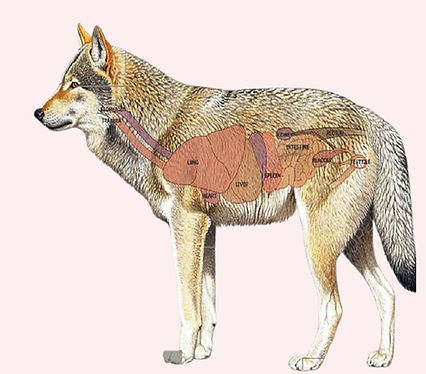
Together, these biological samples provide a detailed picture of wolf health and disease presence, seasonal and long-term diet patterns, environmental conditions, and overall ecosystem stability. By combining field observations with laboratory analysis, AITRC builds reliable, science-based information to support wildlife stewardship across Ahtna’s Eastern Territory.
Hair
Whiskers
We collect hair and whisker samples for stable isotope analysis, which helps researchers understand what wolves have been eating over time.
Because hair and whiskers grow gradually, they record changes in diet across seasons. By analyzing these samples, scientists can identify shifts between prey sources such as caribou, moose, and salmon, providing insight into long-term feeding patterns and ecosystem connections.


External Parasites
We collect external parasites such as ticks, lice, and fleas to evaluate parasite exposure and overall wolf health. By examining these samples, researchers can track the presence of ectoparasites that may affect individual animals or spread disease within wildlife populations. This information helps monitor environmental conditions and emerging health concerns.
Blood

Blood samples are used for disease screening and contaminant analysis.
These samples help identify viruses, bacteria, and other pathogens, as well as exposure to environmental contaminants. Blood testing provides early indicators of health issues before visible symptoms appear and supports long-term monitoring of population health.
Kidney

Kidney samples are used for toxicology and nutritional studies.
Because kidneys filter the bloodstream, they can accumulate certain contaminants. Analyzing kidney tissue helps researchers evaluate long-term environmental exposure and potential health risks within the ecosystem.
Muscle
Liver
Stomach Contents & Fecal Samples
We collect hair and whisker samples for stable isotope analysis, which helps researchers understand what wolves have been eating over time.
Because hair and whiskers grow gradually, they record changes in diet across seasons. By analyzing these samples, scientists can identify shifts between prey sources such as caribou, moose, and salmon, providing insight into long-term feeding patterns and ecosystem connections.
Stomach contents and fecal samples are collected for diet analysis and parasite screening.
These samples allow researchers to identify prey species and seasonal feeding patterns. Fecal samples are also used for gut microbiome and parasite studies, helping scientists understand how diet, environment, and health are connected.
Get Involved!
If you or someone you know has harvested a wolf and would like to contribute to the sampling effort, please contact AITRC for more information. Participants may be eligible for compensation.
Community involvement is essential to strengthening Tribal-led wildlife research and stewardship across Ahtna’s Eastern Territory.

2024 Fisheries Technician, Bailey Roberts, measures the length of a salmon while taking health samples.

Ecologist, Kelsey Stanbro, and 2023 Fisheries Technician, Mia Bobowski, collecting health samples.

Bella Ranck, 2025 Fisheries Technician, joined Kelsey Stanbro, AITRC’s Ecologist, and Morag Clinton, Veterinary Pathologist, for salmon health sample training!

2024 Fisheries Technician, Luke Duvall, taking health samples of the GI tract.